
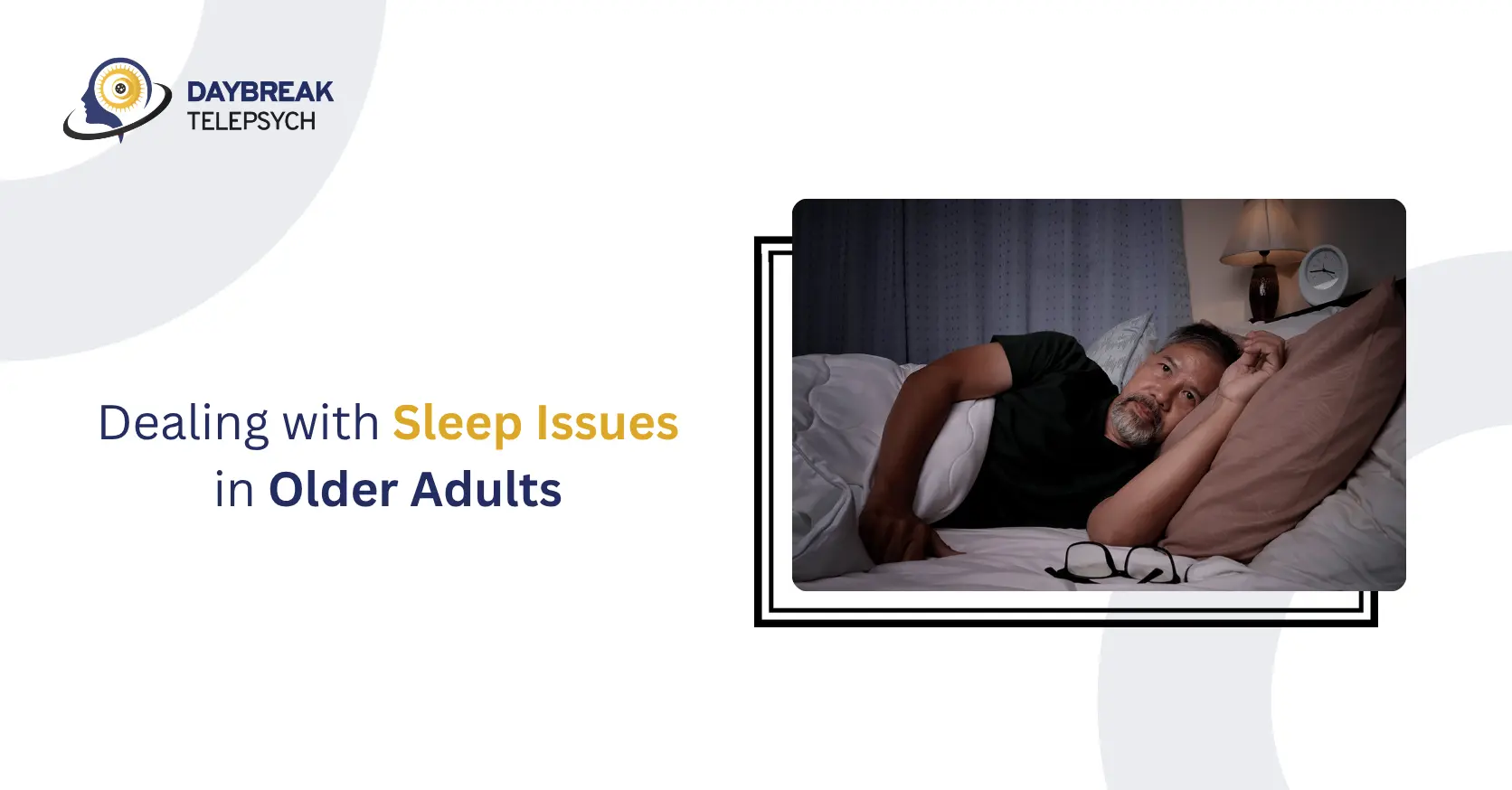
Sleep is important for health at every age. As people grow older, sleep patterns often change. Many seniors have trouble sleeping during the night or getting to sleep. In some cases, there can be an increased need for daytime sleep, too.
At Daybreak Telepsych, we care about those with sleep issues and mental health concerns. We aim to enhance sleep, mood and overall well-being with our geriatric psychiatry services.
Healthy sleep helps with memory, balance, emotions and energy. Not getting a good night’s sleep can have an impact on life and health. That is why understanding sleep issues in older adults is very important.
What Is Insomnia?
Many seniors face a common problem called insomnia. It means having a hard time falling asleep or staying asleep. A person with insomnia might:
- Lie in bed for hours waiting to sleep
- Wake up too early and cannot go back to sleep
Insomnia makes daytime very hard. It can make a person feel:
- Weak
- Unable to pay attention to daily tasks
There are many reasons why insomnia happens. Some common causes include:
- Pain from a medical problem
- Worries and stress that keep the brain too busy to rest
We help patients identify the cause of insomnia in elderly adults and create a safe and simple treatment plan. Our care focuses on both mental health and sleep health together.
Why Do Older People Sleep a Lot?
There are several possible reasons:
- Depression or sadness
- Side effects of medication
- Chronic illness or pain
- Lack of physical activity
- Poor sleep quality at night
At Daybreak Telepsych, we carefully assess each patient to understand the real cause. We believe every person deserves clear answers and gentle support.
How Much Sleep Do Elderly Need If They Take Naps?
If an elderly person naps during the day, nighttime sleep may be slightly shorter, but total sleep in 24 hours should still be around 7 to 8 hours.
At Daybreak Telepsych, we guide patients and families to understand healthy sleep patterns and improve daily routines that support better rest.
What Causes Excessive Sleepiness in Elderly
Here are a few common reasons:
- Medications: Many pills for pain or high blood pressure can make people feel very drowsy
- Sadness: Feeling very lonely or sad can make a person want to stay in bed all day
- Medical Conditions: Problems with the thyroid or heart can take away a person’s energy
If an older adult is sleeping most of the day, it is a good idea to talk to a helper or a professional.
At Daybreak Telepsych, our geriatric psychiatry services help identify these causes through detailed evaluation. We work closely with families to make sure no symptom is ignored.
Understanding Night Terrors
Another scary problem is night terrors in elderly adults. Night terrors are different from regular bad dreams. During a night terror, a person might:
- Scream
- Kick
- Look very frightened while still asleep
They might not even remember it in the morning.
Night terrors can happen because of:
- High stress
- Lack of sleep
- Certain brain changes
This experience can be very frightening for both the person and their family members who watch them.
Good Habits for Better Sleep
One of the best ways to get better rest is to practice good habits. These habits are called sleep hygiene for elderly adults. Changing a few simple things during the day can lead to a great night of rest.
Here are some easy tips for good sleep hygiene:
- Keep a Regular Schedule
Go to bed and wake up at the same time every day.
- Make the Bedroom Comfortable
Keep the room:
- Quiet
- Dark
- Cool
Use comfortable pillows and blankets. Keep the noise level down in the room and take away bright lights that could awaken you.
- Limit Daytime Naps
Long naps can make it harder to sleep at night. Try to keep naps to about 20 minutes.
- Watch What You Eat and Drink
Stay away from:
- Coffee
- Tea
- Soda
Also, do not eat large meals right before bed.
Helping Seniors Sleep Better
When simple habit changes do not work, it is time to look at treating insomnia in elderly adults.
Many years ago, people often used to sleep pills. Today, there are safer ways to help with sleep.
At Daybreak Telepsych, we focus on both mental and physical health.
Treatment options may include:
- Talk therapy for stress or anxiety
- Relaxation techniques before bedtime
- Sleep routine planning
- Medication review and adjustment when needed
Addressing the underlying cause of sleep issues leads to better sleep.
Our goal is to help seniors rest better without relying on strong sleep medications.
Final Thoughts
Many older adults have some sleep problems, which are treatable. If it’s sleep loss, oversleeping, or nighttime restlessness, you can find assistance.
With the right care, seniors can enjoy better rest, better mood, and better health.
Daybreak Telepsych is available to serve you and your family if you are experiencing sleep issues or mental health issues. Our compassionate geriatric psychiatry team provides personalized care for every patient.
Contact us today and take the first step towards good sleep, good health and even better lives
FAQs
What is the best medication for treatment-resistant insomnia?
The best medication for treatment-resistant insomnia is chosen by a psychiatrist.
What is the best sleep aid for dementia patients?
Dementia patients need different sleep aids. They should try non-medication methods with a doctor’s guidance.
