
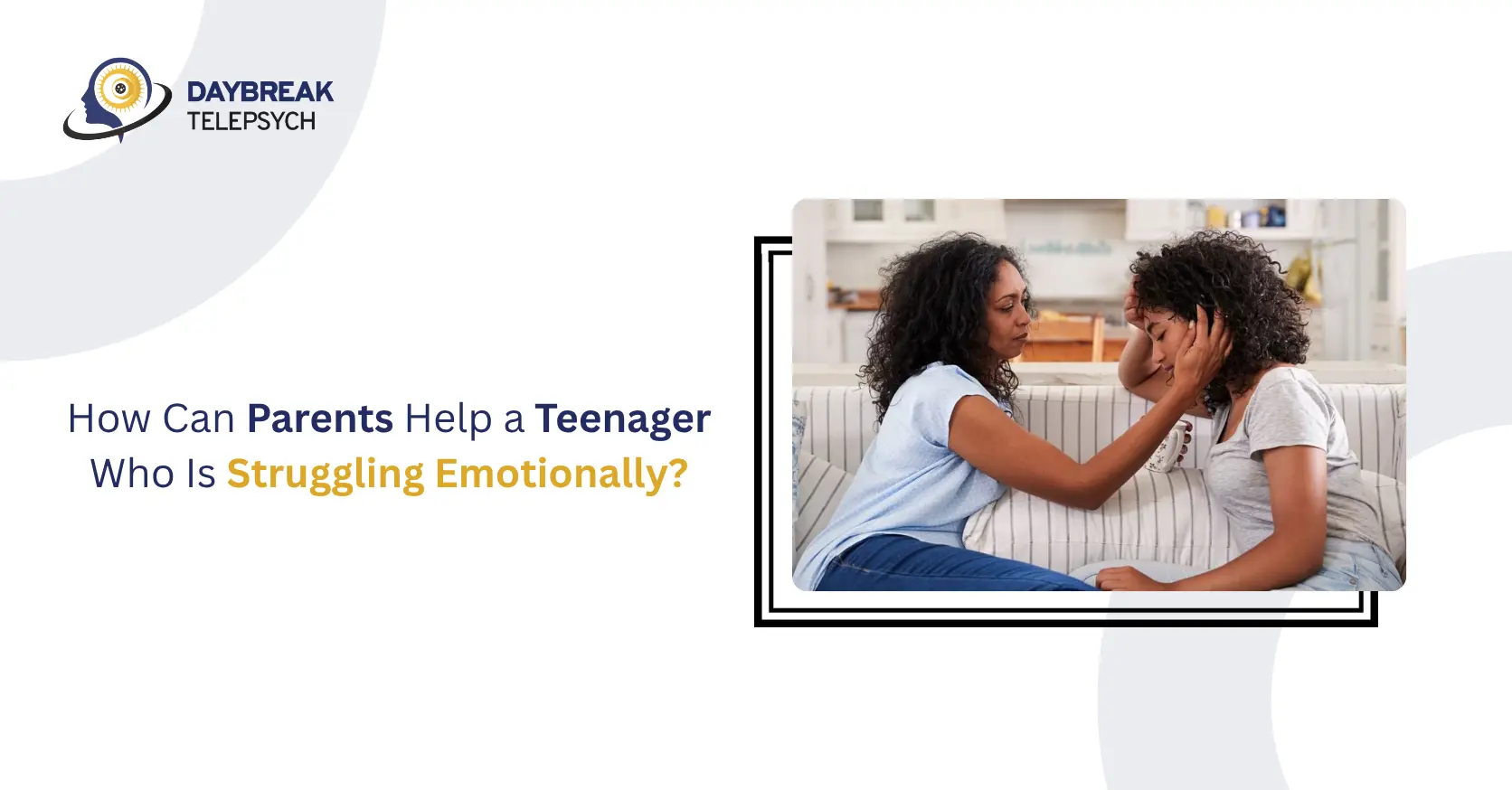
Watching your teenager struggle is one of the hardest things a parent can face. You see your child, once small and carefree, now feeling sad, worried, or angry. You want to help, but sometimes you do not know how.
Daybreak Telepsych offers personalized psychiatric services for children and adolescents and asks parents to contact the practice to discuss their child’s specific concerns.
Below, we will give you clear ways to help a teenager who is struggling emotionally.
Understanding What Your Teenager Is Going Through
Teenage years are hard. Bodies change. Brains change. Friendships change. School gets harder. There is pressure from every side. Your teenager may feel misunderstood by you and others. They may feel disoriented or afraid. They may not even realize what makes them feel this way.
Teens often experience emotional issues. Many teens feel sad, worried, or angry at times. However, if these emotions persist over time, or interfere with personal relationships and activities, it’s time to get attention. Your teen may be suffering from:
- Anxiety
- Depression
- Stress from school and friends
These are issues that are actual problems. They’re not simply “phases” or “attitudes. Your teen is in need of your support.
How Can Parents Help a Teenager Who Is Struggling Emotionally?
Know the Signs That Your Teen Needs Help
Teens do not always say, “I am not okay.” They may show they are having a hard time through changes in their mood, actions, or daily habits
Watch for changes that last for days or weeks. This is even more important if the change is not normal for your teen.
Some warning signs may include:
- Sleeping much more or much less
- Eating much more or much less
- Getting angry often
- Crying a lot
- Feeling sad most of the time
- Not wanting to see friends
- Staying in their room all day
- Losing interest in hobbies
- Stopping sports or other fun activities
- Having trouble at school
- Not wanting to go to school
- Having trouble focusing
- Saying they feel hopeless or worthless
School can be a big clue too. If their grades go down, or they don’t want to go to class, something might be wrong.
A teen may also say they want to hurt themselves or do not want to live. Take these words seriously.
If your teen talks about self-harm or suicide, get urgent help right away. Do not leave them alone during an emergency.
Start with Listening, Not Fixing
When you see these signs, you might want to give advice. But first, just listen.
What you can do:
- Find a quiet time to talk, like in the car
- Ask easy questions like, “What was the best part of your day?”
- Let them talk without stopping them
- Say, “That sounds really hard”
Stay calm during these conversations. If you get upset, your teen might stop talking. Take a deep breath. Your calmness helps them feel safe.
Make Your Home a Safe Place
Your home should be a place where your teen feels loved. They should know they can come to you with anything.
Show you care about their life:
- Ask about their friends and hobbies
- Do fun things together, like cooking or watching a movie
- Ask about their phone and social media. Be curious, not bossy
Talk about feelings like it is normal. Let them know it is okay to be sad, worried, or mad sometimes. Everyone feels that way.
Help Them Build Coping Skills
You can teach your teen simple things to do when they feel upset. These are referred to as Coping Skills.
Support for foundation skills:
- Get enough sleep
- Eat healthy food
Teach them to take a break when stressed:
- Take three deep breaths
- Listen to their favorite song
- Step outside for a minute
Make a “feel-better list” together. Record things that make them happy:
- Reading a book
- Drawing a picture
- Playing with the dog
- Calling a friend
If they are sad, they can select something from the list.
Know When to Get Professional Help
Sometimes, your love is not enough. That is okay. It is important to realize that it does not indicate that you are doing something wrong. It simply means your teen’s doctor must know how.
If the signs do not get better, it is time to see a professional. Teens can improve their self-esteem with the help of mental health physicians.
Personalized psychiatric services are available for children and adolescents with care carefully tailored to the developmental and emotional needs of the child at Daybreak Telepsych. We listen to your teen and make him or her feel better.
We provide comprehensive support, including medication evaluations, second-opinion consultations and ongoing therapy, all through the convenience of telepsychiatry. This means you can meet with a licensed provider from the comfort and privacy of your own home.
We work with your family and can even talk to your teen’s school with your permission.
You Are Not Alone
Parenting a teenager is not easy. It can feel lonely. But many families go through this. You are not alone.
By listening, making a safe home, and teaching simple skills, you are doing great things. You are showing your teen they are loved.
When you need more help, Daybreak Telepsych is here to support you and your family every step of the way. We offer kind, simple and genuine care.
Contact us today to learn more about child and adolescent psychiatric services and find out how your teen can get the support they need.
FAQs
What if my teen is having a crisis right now?
If your teen mentions self-harm, call 911 or go to the hospital. Daybreak Telepsych can help with medicine refills in a hurry. But for a true emergency, always call for help immediately.
Why is my teen fine at school but has big feelings at home?
Home is a safe place. Your teen holds in their feelings all day. When they get home, they let them out. This is normal. It means they trust you. It also means they are struggling. They need your help. Be patient. Be kind. Listen to them.
